

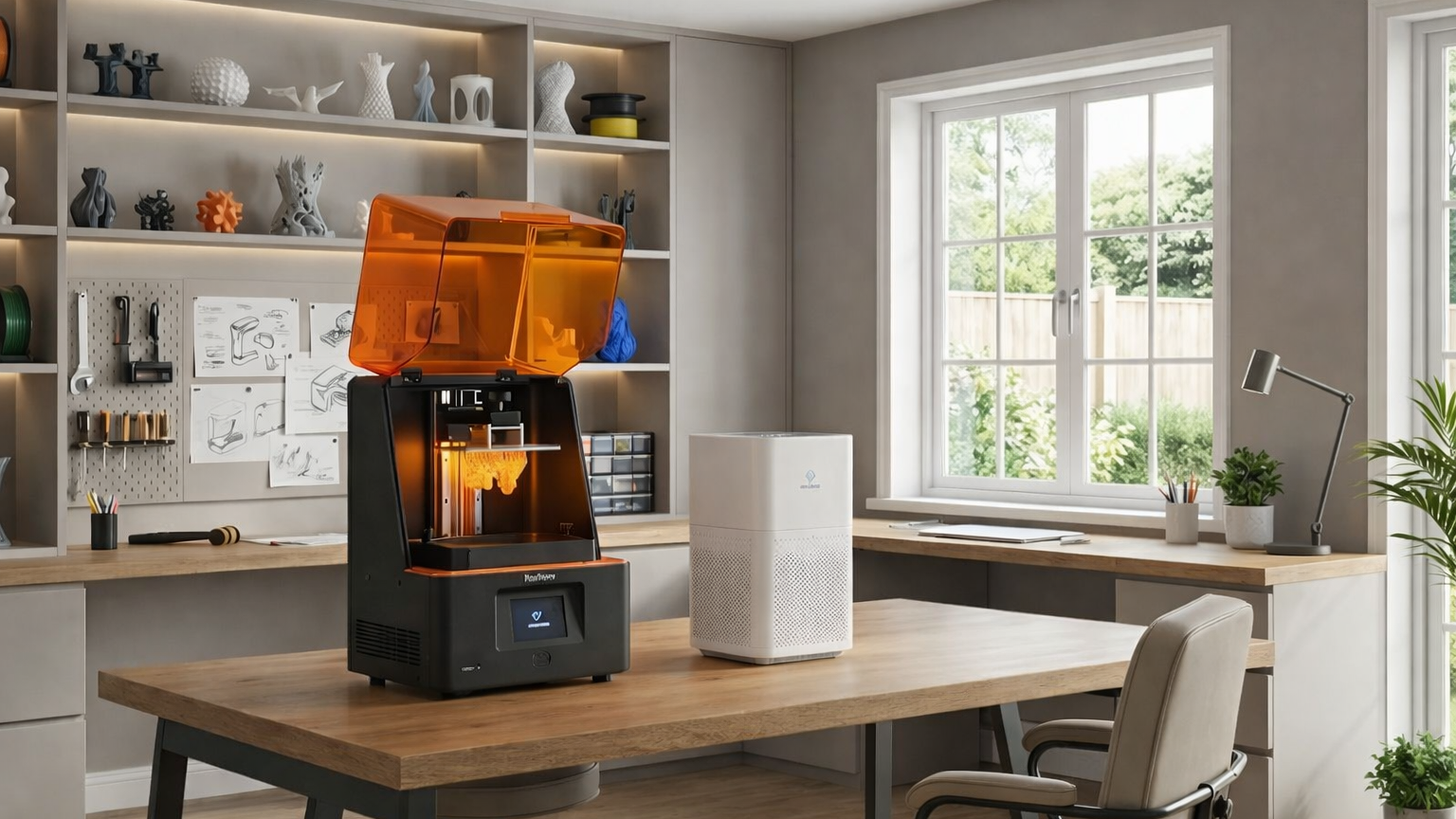
“Does 3D printing cause a smell?” is a common question asked by newcomers. With the rise of 3D printing, more and more people tend to raise concerns about the issues of odor, air quality, and safety since 3D printing involves high temperatures, which can cause apparent odors.
3D printing can cause a smell that can be mildly sweet, plastic, sharp, chemical, or even unpleasant, depending upon the printing technology, materials, and post-processing. These odors are more often than not unpleasant. They might be the sign of volatile organic compounds (VOCs) or ultrafine particles being released, which can lead to worse indoor air.
This article will discuss the problem of 3D printing smells, the materials that emit the smells, the comparative odor of various materials used, and the best ways to reduce the odor front printing or even eliminate it. You will learn how to use 3D printers safely, by knowing how the scent is produced and how to avoid them.
What Causes the Smell in 3D Printing?
There are many factors to this smell brought about by 3D printing, rather than a single source. It is due to heat treatment of the material, chemical reaction, filaments or resin additives, and environmental factors, including temperature and flow of air. The first step to controlling the odor is knowing these causes.
VOC Emissions From Heated Materials
The release of volatile organic compounds during the heating of materials is one of the main reasons why 3D printing emits a smell. 3D printing processes require treating materials at high temperatures. As a byproduct of thermal processes or chemical reaction, when thermoplastics or resins are heated, they may emit VOCs into the air.
These VOCs are usually the cause of the characteristic 3D printing plastic or chemical scent. Various materials emit this or that type and quantity of VOCs, which is why some of the filaments have the slightest scent and the others create pungent and persistent smells. Consumer-grade printers do not typically contain high concentrations of VOCs, but over extended durations in stuffy environments may result in discomfort, headache, or breathing issues.
The VOC emissions also depend on print duration, nozzle temperature, and the volume of material being processed. A long print made with high-temperature materials will tend to have a noticeable smell when compared to short prints with low-temperature filaments.
Post‑Processing Odors
Continuing on the odor, beyond the printing process, the post-processing may also have a high contribution to odor, particularly in resin-based 3D printing. You generally need to wash and clean 3D resin prints properly to remove the uncured resin on the surface. This is usually done with isopropyl alcohol or similar cleaning solvents.
These solvents are very strong and sharp-smelling and can fill a room in a short time, more so when they are left in open containers. Residual solvent and uncured resin may still give off odor during the drying and post-curing process, even after washing. These odors can take hold in small indoor areas, which require effective ventilation.
Additives and Filament Quality
All the 3D printing materials are not equal. Common additives to filament and resin compounds include colorants, plasticizers, stabilizers, and reinforcing agents. These additives modify the scent of the material when heating.
Poor-quality filaments can contain impurities that emit odors. The filaments produced under the more stringent control are higher in quality, have fewer smells, and produce more consistent results. The same material (PLA or ABS) may come in different odors, even based on brand and formulation.
In particular, colored filaments can smell more due to the dyes they have. Use of reputable materials would assist in minimizing unpleasant smells.
Print Settings That Increase Odor
The settings of the printers have a significant influence on odor. Increased nozzle temperatures increase the risk of thermal degradation, which results in a greater intensity of smells and VOCs. It is not necessary to print higher than the recommended temperature since this is likely to make the smell worse without adding any value to the print.
The odor is also influenced by print speed, cooling, and retraction settings. Slow prints result in the material remaining hot, and thus, it may create noticeable smells. Improper cooling allows the filament to overheat and decay.
Optimize in line with the guidelines of the manufacturer. That way, it enhances the quality of the print and reduces unnecessary smell.
How Different 3D Printing Material Types Affect Odor and Safety
The selection of appropriate material is important in controlling smell. The thermal and chemical properties of each filament or resin influence the odor intensity and safety.
PLA and PETG Filaments
PLA is hydrocarbon-free and the most odorless. It is a product of either corn starch or sugarcane, and typically produces a faint sweet odor upon heating. This smell is relatively soft and not unpleasant to the largest number of users, and PLA is already used at home and in classrooms.
PETG also has a low odor. It can emit a plastic-like odor, though it is usually controlled by mere ventilation. PLA and PETG can both be useful indoors as long as there is a good circulation of air.
Though PLA has a low odor, users should not be exposed to it extensively when in closed areas, particularly when having long print-outs.
TPU and Nylon Filaments
TPU and nylon have more colorant odors. TPU also tends to have a rubber odor, whereas nylon may have a sharper, chemical odor as it requires higher temperatures. Increased temperatures enhance VOC emissions.
The scent is not that powerful, though in intimate or stuffy rooms it might be the cause of discomfort. Users who deal with engineering-grade or flexible filaments must be concerned with ventilation and odor management.
ABS and ASA Filaments
ABS and ASA are other filaments that are most odorous. ABS produces styrene, which has a strong plastic odor, and it lingers in the air even after stopping printing.
ASA, like ABS, is in a similar odor, but more UV-resistant. Due to high emissions, users often wonder whether they need to vent ABS when 3D printing. It is strongly advised not to print such filaments in the house without an enclosure or proper ventilation. Constant exposure to styrene vapors may lead to discomfort and irritation, and as such, it is important to reduce odors.
MSLA and Resin Printing
Printing based on resin usually has the most odors. Photopolymers and reactive chemicals are found in the liquid resin tank, and they give off sharp and chemical odors upon printing and post-processing.
This is particularly evident in the process of washing and curing, when solvents and uncured resin are not covered with any space. Residual resin may continue to smell after it is printed unless it is cleaned and cured.
Due to the mentioned problems, odor control in resin printing is more rigorous than in filament printing, particularly in the inside.
3D Printing Material Smell Comparison Table
PLA and PETG produce the least apparent smell when compared to other materials. ABS, ASA, and resin have heavier odors. TPU and nylon are placed in the middle; odor can vary according to the temperature and print time. Such differences assist users in selecting materials that suit their comfort and workstations. Let’s compare them in depth.
|
Material |
Odor Intensity |
Common Scent |
Indoor Safety |
|
PLA |
⅕ |
Sweet / Sugary |
Safe with basic ventilation |
|
PETG |
⅖ |
Light plastic |
Safe with standard airflow |
|
TPU |
⅗ |
Rubber-like |
Ventilate during long prints |
|
Nylon |
⅗ |
Sharp / Chemical |
Strong ventilation recommended |
|
ABS/ASA |
⅘ |
Strong Plastic / Styrene |
Enclosure and filtration required |
|
Resin |
5/5 |
Intense Chemical |
Dedicated VOC management required |
Effective Ways to Reduce 3D Printer Odor
In case you have concerns about the issue of 3D printing creating an unpleasant odor in your working area, there are a number of established procedures that can help considerably reduce or even eradicate the odor. These include easy environmental modifications of the environment, as well as more advanced air-feeding machines that have been constructed to specifications to 3D print.
Use Printer Enclosures
One of the best methods of odor control is enclosing your printer. The enclosure also contains the fumes in a well-controlled area rather than allowing them to spread all over the room. It is particularly critical when using high-temperature filament or resin printers.
Additional features like filtration or ventilation systems can be installed in several enclosures, thereby ensuring that the odors are contained before releasing the air back into the room. Besides this, it is enclosed, which makes it more stable in temperature and enhances the quality of prints.
Optimize Ventilation and Airflow
Ventilation is essential to eliminate the odor of the 3D printer. Even by opening a window or operating an exhaust fan, it is possible to dissipate smells and avoid subjecting harmful volatile organic compounds (VOCs) to accumulation. Place the printer in a place with a window or a vent to ensure that fumes are taken away, instead of staying inside the house.
In the case of an isolated printing space, it is worth looking at a ducting or a localized air conditioning system that will vents air outdoors. This method gives a regular odor control that does not affect the building as a whole.
Use a VOC Purifier Designed for 3D Printing
Common air purifiers typically focus on dust and allergens only, yet can fail to capture VOCs emitted in printing. Cleaners are hence favorable.
The GreenPrint Purification Unit is designed specifically for 3D-printer VOCs. Compared to conventional filters based on adsorption, GreenPrint breaks down VOCs on a chemical level. This saves on frequent replacement of filters and simplifies maintenance, and is a good long-term solution in both resin and filament applications.

Key features include:
-
Direct VOC Degradation: Neutralizes VOCs at a molecular level.
-
Dual Degradation Technology: It incorporates photocatalysis with a second degradation reaction to prevent the release of filtered pollutants back into the air.
-
High Purification Efficiency: Tests indicate that in only 25 minutes, the unit removes TVOC concentration by up to 92 percent.
-
Maintenance-Free Operation: It lasts many years without changing filters very often.
-
Continuous Air Treatment: The unit deals with long 3D printing sessions of VOC emissions.
Lower Print Temperature
Choose the lowest effective lower nozzle or curing temperatures to use on each material. An elevated temperature enhances the deterioration of the materials and releases greater VOCs. Use the settings suggested by the manufacturer, and keep the machine cool. This improves the quality of print without reducing odor.
A less-used and easy method to cut odor is fine-tuning of print profiles.
FAQ
Is a 3D Printer's Smell Toxic to Pets or Babies?
Moderate 3D-printer odors are normally not harmful, whereas pets and infants are more sensitive to air quality. The increased rate of breathing and reduced size of their lungs also expose them to VOCs. Maintain good ventilation and keep printers out of the rooms where infants or animals spend their time.
Can I Sleep in the Same Room as a 3D Printer?
It is not advisable to sleep with a printer that is running and using filament or resin at high temperatures. Constant contact with the smell may lead to pain or breathing difficulties. In case of overnight printing, an enclosure and efficient ventilation or a specific purifier VOC are required.
How Long Does the Smell Linger in a Room After Printing?
Wait time depends on the print time, ventilation, and the material. PLA or PETG is clear within minutes, ABS or resin may take hours. Odors can persist even longer in poorly ventilated spaces. This may be reduced significantly by enhancing air circulation and employing the best VOC air purifier for 3D printing.
Conclusion
Does 3d printing cause a smell? Yes. Its intensity depends on materials, methods, and environmental factors. Mild PLA and strong resin and ABS smells based on their origin, helps to prevent them with better knowledge.
Users can reduce the odor, as well as enhance the quality of indoor air. They can select appropriate materials, maximize the environment, enhance ventilation, and make use of highly specialized solutions such as the GreenPrint Purification Unit. With the correct precautions, 3D printing can be incorporated safely in households, offices, and workplaces without lingering and unpleasant smells.
Share:
Resin 3D Printer Vat Cleaning Guide: How to Clean the Vat Safely
Best 3D Printers in 2026: Latest Tests and Results