

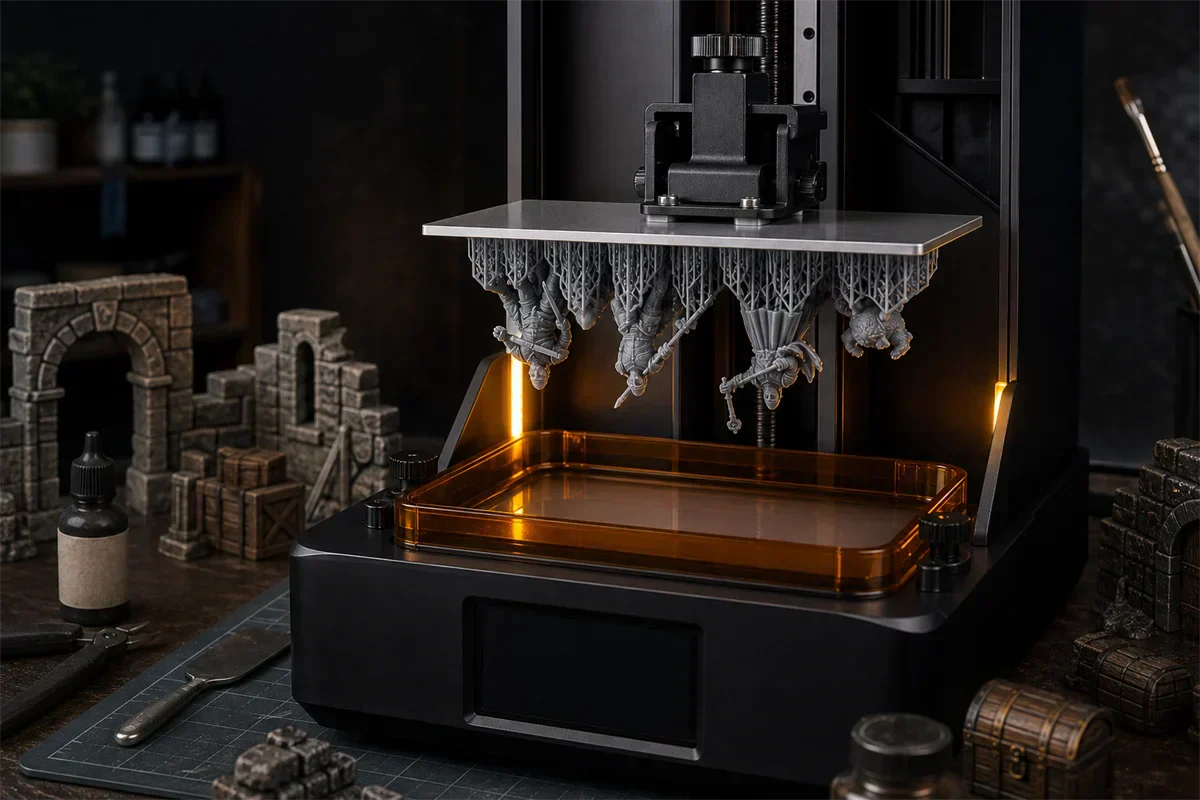
Von 28-mm-Helden bis zu kampagnenbestimmenden Boss-Begegnungen – der Harzdruck hilft Tabletop-RPG-Hobbyisten, schärfere Rüstungen, Gesichter, Waffen, Requisiten und Gelände auf den Spieltisch zu bringen.
Für viele Dungeons & Dragons-Spieler wird die Geschichte erst dann wirklich lebendig, wenn die Charaktere, Monster, Gelände und Requisiten auf dem Tisch stehen. Ein bemalter Waldläufer, der neben einer zerfallenen Mauer steht, eine riesige Boss-Kreatur oder eine spezielle Miniatur, die für eine bestimmte Kampagne entworfen wurde, kann eine normale Sitzung in ein unvergessliches Tabletop-RPG-Erlebnis verwandeln.
Deshalb wenden sich immer mehr D&D-Fans dem Harzdruck zu. Im Vergleich zum traditionellen Filamentdruck ist der 3D-Harzdruck besonders gut darin, kleine Details, glatte Oberflächen, scharfe Rüstungskanten, Gesichtsmerkmale, Waffentexturen und winzige Accessoires einzufangen. Für D&D-Miniaturen, bei denen viele Modelle im 28-mm-Maßstab oder ähnlichen Tabletop-Größen gedruckt werden, sind diese Details wichtig.
Das Ziel ist nicht nur ein erfolgreicher Druck. Das eigentliche Ziel ist eine saubere Miniatur, die ihre winzigen Details nach dem Grundieren, Bemalen, Waschen und Trockenbürsten sichtbar behält.
Warum Harzdruck so gut für D&D-Miniaturen geeignet ist
D&D-Modelle sind klein, detailliert und oft visuell komplex. Eine einzelne Miniatur kann ein Gesicht, Haare, Rüstung, Umhangfalten, Waffen, Zaubereffekte, Gürtel, Beutel und winzige Basisdekorationen umfassen. Monsterminiaturen können noch anspruchsvoller sein, mit Schuppen, Klauen, Flügeln, Hörnern, Zähnen, Fell oder Skelettstrukturen.
Hier hat ein 3D-Harzdrucker einen klaren Vorteil. Er kann feine Geometrien mit glatteren Schichtlinien und präziseren Kanten erfassen als die meisten FDM-Drucker, was ihn zu einer guten Wahl macht für:
Spielerhelden, NSCs, Schurken, Begleiter, Stadtwachen, Händler und kampagnenspezifische Modelle.
Monsterminiaturen, Bosskreaturen, beschworene Effekte, benutzerdefinierte Basen und Zustandsmarker.
Dungeon-Streuung, Türen, Truhen, Fallen, Fässer, Ruinen, Tavernen-Requisiten und Schlachtfelddetails.
Relikte, Trophäen, Missionsziele, Zauberartefakte und einzigartige Gegenstände, die zur Kampagne passen.
Beginnen Sie mit dem richtigen Modell für den Tabletop-Maßstab
Sauberere Drucke beginnen, bevor der Drucker startet. Bei der Auswahl oder Gestaltung von D&D-Miniaturen sollten Sie immer an die endgültige Tabletop-Größe denken. Manche Modelle sehen auf dem Bildschirm fantastisch aus, haben aber Details, die nach dem Drucken zu dünn, zu flach oder zu zerbrechlich sind.
- Sind Waffen zu dünn?
- Brechen Finger, Hörner oder Stäbe wahrscheinlich ab?
- Sind Gesichtsdetails tief genug, um Grundierung und Bemalung zu überstehen?
- Ist die Basis dick genug?
- Werden dekorative Teile richtig gestützt?
- Wird das Modell aus Tischabstand noch deutlich erkennbar sein?
Für Tabletop-RPG-Anwendungen funktionieren kräftige Details oft besser als ultra-zerbrechliche Details. Leicht übertriebene Rüstungskanten, tiefere Stofffalten, stärkere Gesichtsmerkmale und sichtbarere Texturen können eine Miniatur leichter zu bemalen und im Spiel leichter zu erkennen machen.
Verwenden Sie eine intelligente Ausrichtung, um feine Details zu schützen
Die Modellausrichtung hat einen großen Einfluss auf die Druckqualität. Eine schlechte Ausrichtung kann sichtbare Schichtlinien über Gesichtern, Schilden, Waffen oder Rüstungsplatten erzeugen. Sie kann auch Stützen direkt auf wichtigen Oberflächen platzieren.
Bei Charakterminiaturen ist die Vorderansicht am wichtigsten. Versuchen Sie, Stützen von Gesichtern, Brustdetails, Umhängen, Schilden und Waffen fernzuhalten. Bei Monsterminiaturen achten Sie besonders auf Flügel, Schwänze, Klauen, Hörner und dünne Gliedmaßen.
- Vermeiden Sie es, das Gesicht direkt nach unten zu richten.
- Platzieren Sie Stützmarkierungen an versteckten oder weniger sichtbaren Stellen.
- Vermeiden Sie es, zerbrechliche Waffen völlig ungestützt zu drucken.
- Winkeln Sie große flache Bereiche an, um Saugkraft und Schichtartefakte zu reduzieren.
- Stellen Sie sicher, dass die Basis stabil und leicht zu stützen ist.
Stützen machen den Unterschied zwischen gedruckt und sauber
Stützen sind einer der Hauptgründe, warum D&D-Miniaturen entweder sauber aussehen oder eine starke Reparatur erfordern. Zu wenige Stützen können zu Fehlschlägen, Verformungen oder fehlenden Details führen. Zu viele schwere Stützen können Oberflächen beschädigen und unschöne Spuren hinterlassen.

Für kleine D&D-Miniaturen verwenden Sie leichte Stützen für empfindliche Bereiche und mittlere Stützen nur dort, wo das Modell Festigkeit benötigt. Wichtige Bereiche, die gestützt werden müssen, sind Füße und Basiskontaktpunkte, Waffenspitzen, Hände und Finger, Umhangkanten, Hörner, Schwänze, Flügel, Stacheln, überhängende Rüstungsteile, Zähne, Klauen und dünne Gliedmaßen.
Entfernen Sie nach dem Druck die Stützen vorsichtig vor der endgültigen Aushärtung, solange das Harz noch leicht flexibel ist. Dies hilft, gebrochene Teile zu reduzieren und die Reinigung der Stützen zu erleichtern.
Harzauswahl ist wichtig für Detail und Haltbarkeit
Nicht alle Harze sind ideal für D&D-Miniaturen. Einige Harze erfassen Details gut, sind aber spröde. Andere sind härter, können aber feine Details aufweichen. Für den Tabletop-Einsatz sollte das beste Harz Detail, Festigkeit und Bemalbarkeit in Einklang bringen.
Für Charakterminiaturen und Monsterminiaturen suchen Sie nach Harz, das scharfe Kanten und feine Texturen halten kann und gleichzeitig robust genug für die Handhabung während des Spiels ist. Wenn Ihre Modelle oft transportiert, in Schaumstoffeinlagen gelagert oder wöchentlich verwendet werden, wird die Haltbarkeit noch wichtiger.
Waschen und Härten ohne Detailverlust
Die Nachbearbeitung ist ein weiterer wichtiger Schritt. Selbst ein großartiger Druck kann Details verlieren, wenn er übermäßig gewaschen, unzureichend gewaschen, überhärtet oder grob behandelt wird. Winzige Harzrückstände können sich in Umhängen, Rüstungsspalten, Schuppen und Monstertexturen verstecken. Wenn sie nicht richtig gereinigt werden, können diese Bereiche nach dem Grundieren weich oder unordentlich aussehen.
- Waschen Sie das Modell gründlich, aber vorsichtig.
- Verwenden Sie bei Bedarf eine weiche Bürste für tiefe Vertiefungen.
- Lassen Sie das Modell vor dem Aushärten vollständig trocknen.
- Vermeiden Sie übermäßiges Aushärten dünner Teile.
- Entfernen Sie die Stützen vorsichtig vor der endgültigen Aushärtung.
- Überprüfen Sie das Modell vor der Grundierung.
Vorbereitung zum Bemalen: Den Druck tischfertig machen
Die Bemalungsvorbereitung ist der Punkt, an dem sich ein sauberer Harzdruck wirklich auszahlt. Wenn das Modell scharfe Details aufweist, wird das Bemalen einfacher und angenehmer. Trockenbürsten erfasst schärfere Kanten. Washes fließen besser in Vertiefungen. Gesichter, Rüstungen, Lederriemen, Kettenhemden, Schuppen und Stofffalten werden leichter zu definieren.
Überprüfen Sie vor dem Bemalen auf Stützspuren, kleine Unebenheiten, unausgehärtete Harzrückstände, Schichtartefakte, gebrochene dünne Teile und raue Basiskanten. Verwenden Sie feine Schleifwerkzeuge oder ein Bastelmesser, um sichtbare Spuren zu entfernen. Bei Miniaturen ist weniger meist mehr: Vermeiden Sie es, skulpturierte Details wegzuschleifen.

Sobald die Oberfläche sauber ist, tragen Sie eine dünne Grundierungsschicht auf. Dicke Grundierung kann feine Details des Harzdrucks verdecken, insbesondere bei Modellen im 28-mm-Maßstab.
Was D&D-Hobbyisten mit Harzdruck herstellen können
Ein 3D-Harzdrucker eröffnet weit mehr als nur Spielercharaktere. Dungeon Master können eine ganze Kampagne visuell mit individuell gedruckten Objekten aufbauen, anstatt sich auf generische Platzhalter zu verlassen.
- Heldencharakter-Miniaturen für jeden Spieler
- Monsterminiaturen für Begegnungen
- Große Bosskreaturen für Kampagnenfinale
- Individuelle NSCs, Begleiter, Wachen, Händler und Bösewichte
- Dungeon-Türen, Truhen, Fallen, Fässer und Geländestreu
- Zaubereffektmarker, Zustandsmarker und Zielobjekte
- Individuelle Basen für Wälder, Höhlen, Ruinen, Schneefelder und Städte
- Einzigartige Kampagnentrophäen, Relikte und Story-Objekte
Warum HeyGears RS Turbo für den Druck von Tabletop-Miniaturen geeignet ist
Für D&D-Hobbyisten sollte der ideale Drucker präzise, stabil und einfach zu bedienen sein. Der Miniaturendruck umfasst kleine Teile, feine Details und wiederholte Produktion. Sie könnten heute einen Helden drucken, morgen sechs Diener und vor der nächsten Sitzung eine große Boss-Miniatur.
Der HeyGears RS Turbo eignet sich hervorragend für Tabletop-RPG-Miniaturen, da er für scharfe Details, glatte Oberflächen und zuverlässigen Harzdruck konzipiert ist. Sein optimierter Amber Screen hilft, die Lichtkontrolle für sauberere Kanten und genauere kleine Details zu verbessern, während das stabile Z-Achsen-System eine gleichmäßige Schichtqualität für Rüstungstexturen, Monsterschuppen, Gesichtsdetails und feine Waffen unterstützt.
Für Kreative bedeutet das weniger Fehldrucke, weniger Reinigungsaufwand und besser aussehende Modelle vor dem Bemalen. Egal, ob Sie Charakterminiaturen, Monsterminiaturen, Geländeteile oder 28-mm-Zubehör drucken, der RS Turbo liefert das Detailniveau, das Tabletop-Hobbyisten vom Harzdruck erwarten.
Abschließende Gedanken
D&D basiert auf Vorstellungskraft, aber Miniaturen machen diese Vorstellungskraft sichtbar. Saubere Harzdrucke können ein Charakterblatt in einen Helden, einen Statusblock in ein furchterregendes Monster und eine einfache Begegnung in einen filmischen Moment verwandeln.
Um bessere Ergebnisse zu erzielen, beginnen Sie mit tabletop-freundlichen Modellen, verwenden Sie eine intelligente Ausrichtung, stützen Sie sorgfältig ab, wählen Sie das richtige Harz, waschen und härten Sie richtig und nehmen Sie sich Zeit für die Bemalungsvorbereitung. Von Charakterminiaturen bis zu Monsterminiaturen, von 28-mm-Helden bis zu kampagnenbestimmenden Bossen – der Harzdruck gibt Tabletop-RPG-Hobbyisten die Freiheit, genau die Modelle zu erstellen, die ihre Geschichten verdienen.
Haftungsausschluss: Dungeons & Dragons und D&D sind Marken von Wizards of the Coast LLC. Dieser Artikel ist nicht mit Wizards of the Coast verbunden, wird nicht von ihnen unterstützt, gesponsert oder genehmigt. HeyGears-Produkte sind Allzweck-3D-Harzdrucker für Hobby-, Tabletop- und Miniaturenerstellung. Alle in diesem Artikel verwendeten Bilder sind originale generische Tabletop-Fantasy-Hobby-Bilder und stellen keine offiziellen Dungeons & Dragons-Charaktere, Logos, Regelbücher oder proprietäre Kreaturendesigns dar.
Teilen:
Eine Maschine, endlose Einnahmequellen: Warum der HeyGears G1X für Kleinunternehmen gebaut wurde
32-mm-Miniaturen: Warum Details, Stützstrukturen und Stabilität wichtig sind