

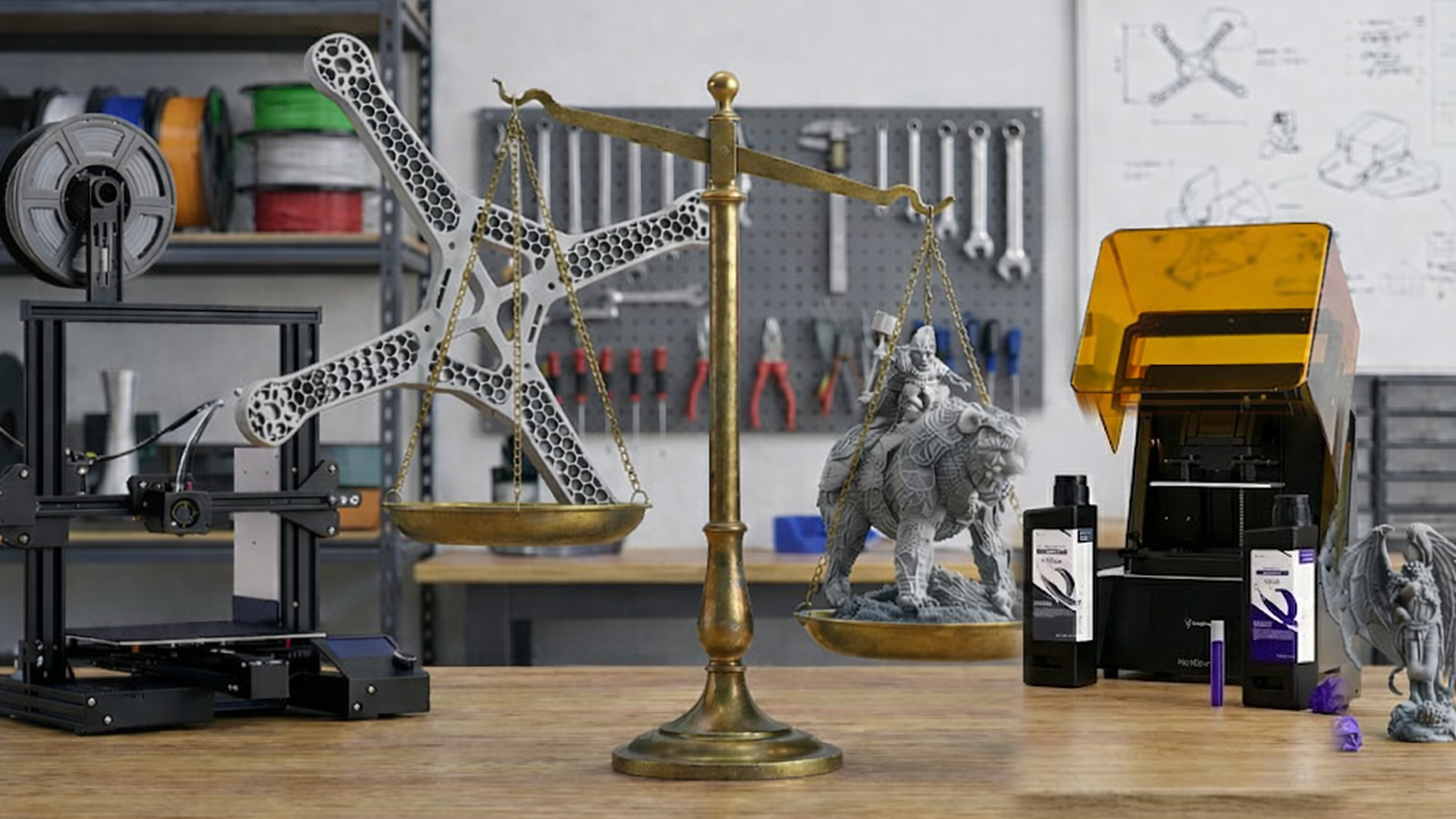
In the world of 3D printing, choosing between FDM (Fused Deposition Modeling) and UV Resin (SLA/DLP) often comes down to detail versus speed. However, weight is a frequently overlooked but critical factor. For two models of the exact same size, a resin print will almost always feel significantly heavier than its FDM counterpart.
Here is a breakdown of why this weight gap exists and how to choose the right tech for your project.
Core Reasons Behind the Weight Difference (With Comparison)
Two prints can share the same dimensions, the same shape, and even similar materials, yet feel completely different in your hand. That contrast comes down to a few fundamental differences in how FDM and resin printing work.
Internal Structure: Solid vs. Infill
This is by far the biggest factor affecting weight.
FDM (Fused Deposition Modeling)
-
FDM prints are almost never 100% solid. To save material and printing time, models typically use infill patterns (grid, gyroid, honeycomb, etc.).
-
Common infill densities are only 10–20%, meaning most of the interior is air.
UV Resin (SLA/DLP/LCD)
-
By default, resin prints are 100% solid.
-
While most slicers allow you to hollow a model and add drain holes manually, a resin print without special preparation is essentially a solid block of plastic.
Small Differences in Material Density
Even if both prints are made fully solid, resin is usually slightly denser than common FDM materials.
|
Material Type |
Average Density (g/cm³) |
Notes |
|
PLA (FDM) |
~1.24 |
Most common, relatively lightweight |
|
ABS (FDM) |
~1.04 |
Lowest density, can float on water |
|
Standard Resin |
~1.10 – 1.20 |
Similar to PLA |
|
Tough / ABS-like Resin |
~1.15 – 1.25 |
Slightly heavier |
Note: Although the raw density values are close, FDM prints contain large internal air gaps. As a result, their effective density is far lower than resin prints.
Moisture Absorption and Post-Processing Effects
Resin:
-
After washing and curing, resin prints are generally stable.
-
However, if a hollowed model is not properly cleaned, trapped liquid resin inside can significantly increase its weight.
FDM:
Some filaments (such as nylon) absorb moisture from the air. Over long periods, this can cause a very slight increase in weight—but usually negligible.
Summary Comparison
|
Feature |
FDM Printing |
UV Resin Printing |
|
Weight (same vlume) |
Lighter (due to infill) |
Heavier (usually solid) |
|
Weight control |
Very high (0–100% infill) |
Moderate (manual hollowing + holes) |
|
Best use cases |
Large props, drone parts, lightweight prototypes |
Figurines, jewelry molds, high-detail parts |
If lightweight design is your priority—such as drone frames or large cosplay props, FDM is the clear winner. If you want a solid, premium feel, for example, desktop display pieces—the added weight of resin prints actually enhances the perceived quality.
FDM and UV Resin: Which Technology Should You Choose?
Deciding between a resin vs filament 3D printer depends on your part’s purpose. Use FDM for light, functional pieces where strength matters. Resin is heavier but keeps fine details that FDM cannot. Knowing these differences helps you get the part right on the first try.
Choosing FDM for Cosplay and Drones
If you’re making wearable items like cosplay armor or drone frames, FDM usually works best. You can play with infill and wall thickness to cut weight without making the part fragile. A shoulder piece for armor, for example, can be printed with 25% gyroid infill and 2–3 mm walls. It will hold its shape but stay comfortable to wear. Drone arms need more strength, so 30% infill is better. You’ll also notice that printing long pieces horizontally reduces support material, which saves extra weight. FDM works well when the part needs to move or be carried around.
Choosing Resin for Miniatures and Jewelry
Resin shines when detail is the priority. Miniatures come out crisp with UltraPrint-Production PAP10 Precise Detail Resin, which can handle pillars as small as 0.1–0.15 mm. Ash grey or black colors make finishing and painting easier, and the prints stay stable for years. The edges stay sharp, and textures remain fine, which is why collectors prefer resin for display pieces.
For jewelry or casting, UltraPrint-Casting PAC10 Wax Casting Resin works well. It has 70–80% wax content and allows walls as thin as 0.12 mm. The material burns cleanly for metal casting, and small pieces like rings or pendants print accurately with minimal post-processing. Keeping prints vertical and using minimal supports preserves details and prevents warping.

Practical Tips for Modifying Print Weight
How heavy your 3D print ends up depends a lot on the printing technology. Even small tweaks during design can make a noticeable difference without weakening the part.
Hollowing Techniques for Resin Models
Resin prints tend to be solid, which makes them heavier than you might expect. If you’re printing miniatures, hollowing the interior can save a lot of material. Keep walls thick enough, around 2–3 mm, so they don’t collapse, and include a couple of small drainage holes to let uncured resin out. You’ll find that hollowing can cut resin use by almost half while keeping the tiny details sharp, a great advantage when estimating resin 3D print costs. Printing vertically can also help; it reduces the amount of internal support you need and keeps delicate parts from warping.
Adjusting Infill Patterns for FDM
With FDM, you have more control over weight. When you plan your part, the infill pattern really changes how it performs. If you want your part to stay strong but not feel too heavy, gyroid or honeycomb infill works well. For cosplay armor, twenty to thirty percent usually holds the shape without adding extra bulk. Drone frames need a little more, around thirty-five to forty percent, so they do not bend or flex during flight. Small adjustments also help. You can make walls half a millimeter thinner in areas that do not carry much load to save weight, especially on larger prints. Planning these details before printing helps the part perform better and avoids surprises.
The best results often come from mixing techniques. With FDM, you can hollow some sections but keep infill where edges need support. For resin parts, it helps to keep the outer shell solid and hollow out the inside. This protects the details and keeps the part strong. If you plan this in your design before printing, you save material and avoid trial and error. Doing it this way also makes sure your part feels balanced, works well, and is ready to use straight off the printer.
FAQ
Do UV Resin Prints Sink or Float?
UV resin prints are generally denser than water, so they usually sink. Hollowing or reducing wall thickness can make small parts lighter, but most solid resin models will stay underwater.
Does FDM Offer a Better Strength to Weight Ratio?
Yes. FDM lets you adjust infill and wall thickness, giving you strong parts with less material. You can make lightweight functional pieces without sacrificing structural performance.
Is There a Filament Lighter Than Standard PLA?
Yes. Materials like PETG or PLA blends with lower density can be slightly lighter. You can also reduce weight by lowering infill or wall thickness while keeping the outer shape the same.
What Is the Difference Between 100g and 300g UV Resin?
There is no performance difference between 100g and 300g UV resin as long as the brand, model, and color are the same. They share identical exposure settings, print accuracy, mechanical strength, and curing behavior.
The only real difference is quantity and intended use: 100g is better suited for small prints, parameter tuning, or testing a new resin, while 300g is more practical for regular printing and medium-sized models, reducing the need for mid-print refills and offering a lower cost per gram.
Conclusion
For miniatures or jewelry, selecting from high-quality resins plays an important role in achieving the perfect finish. For instance, using UltraPrint-Production PAP10 keeps tiny details sharp, and UltraPrint-Casting PAC10 prints clean for casting. When you choose between FDM and UV resin, focus on what your part really needs. If you want something light and functional, like cosplay armor or drone frames, FDM lets you adjust infill and wall thickness so the part does not carry extra weight.
Weight doesn’t just affect handling; it changes how a part performs. Hollowing resin pieces or adjusting FDM infill allows you to balance strength and material use. How you make small choices in your design changes the final print more than you might think. However, planning ahead saves you time, reduces wasted material, and gives you a part that fits and works right.
共有:
How Long Does UV Resin Take to Cure? A Complete Guide for 3D Prints
3D Printing Pen: How to Use It and Common Tips for Beginners