

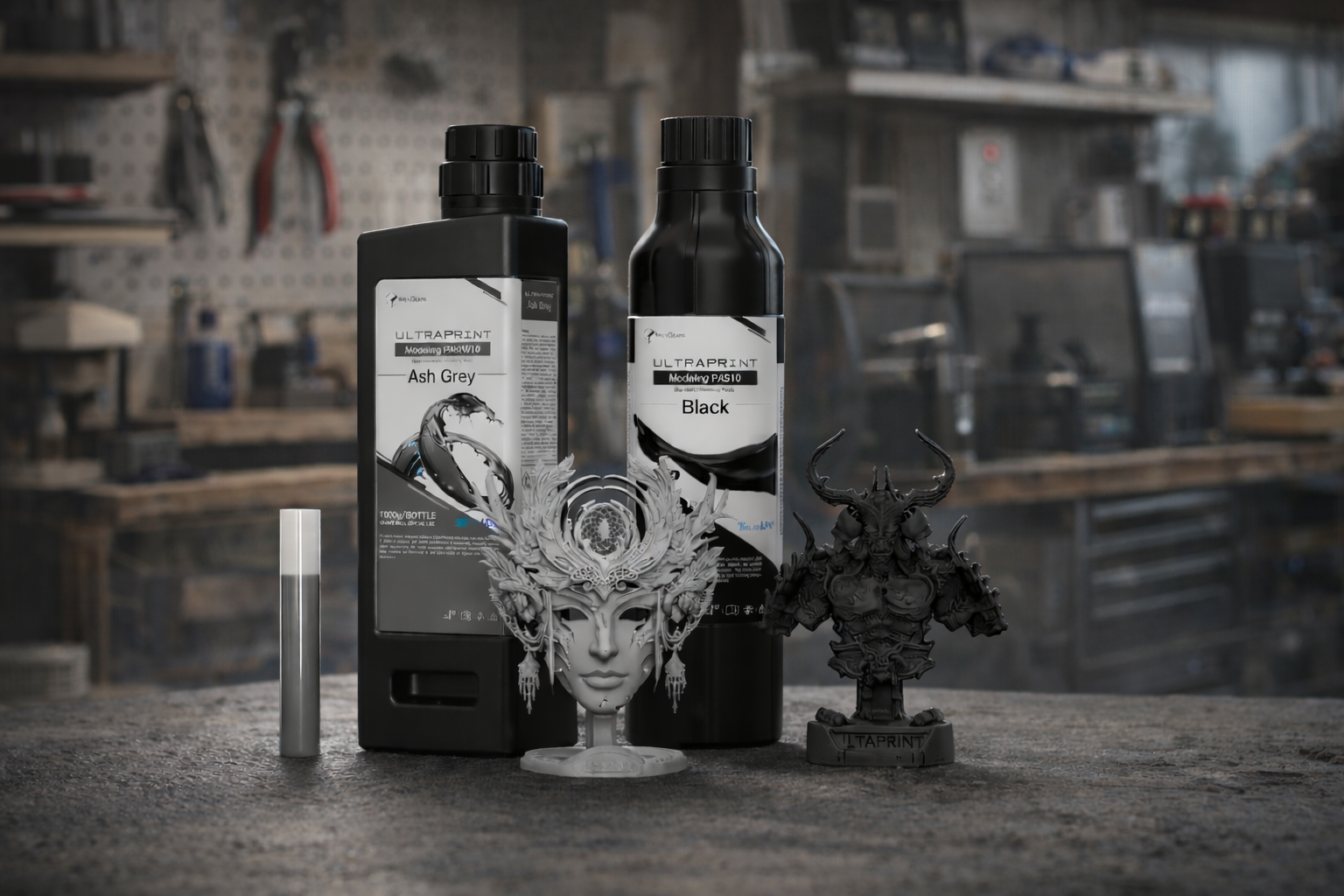
You may be curious about what is resin made of if you use 3D printing, like crafting, manufacturing, or product prototyping. Resin is a flexible material that is used in industries due to the fact that it is strong, precise, and flexible.
Resin exists in a wide range of forms, including natural tree sap, advanced synthetic formulae used in 3D printers, and so on, but each is meant to be applied in a different application.
In this article, we will explain the composition of resin, break down the chemical composition of resin, discuss the nature of resin, the safety factor aspect, and briefly discuss the applications of resin, especially in the 3D printing process.
What Is Resin?
Resin is a solid and semi-solid material that may be molded, cured, or hardened into a stable form. In ancient times, plants were the source of resin, but the majority of commercial resins.
Modern resins are generally polymers combined with curing agents and additives that determine the strength, flexibility, color, and surface finish. They have been frequently used in the 3D printing industry in recent years.
Advantages of Resin Include
-
High precision and fine detail reproduction for complex designs.
-
Strong bonding and coating properties across surfaces.
-
Versatility for casting, molding, and 3D printing applications.
Disadvantages of Resin Include
-
Skin and respiratory irritation.
-
Sensitivity to UV radiation and inappropriate storage.
-
Poor recycling ability compared to certain plastics.
Natural Resin vs Synthetic Resin
Resins can generally be divided into two main categories based on their origin and composition: natural resins and synthetic resins. Natural resins refer to materials extracted from trees and plants, such as pine resin or amber, and are mainly used in traditional applications like varnishes and glues. Synthetic resins, by contrast, are chemically engineered polymers designed for industrial use, offering controlled properties and consistent performance.
In short, natural resins are plant-based materials suited for traditional uses, while synthetic resins are engineered for reliable, high-performance applications.
What Is the Chemical Composition of Resin?
To get a comprehensive understanding of what resin is all about, it is important to take a glimpse at its chemical composition.
Basic Composition of Resin
At a basic level, resin is primarily composed of organic polymer chains formed from carbon-based molecules. These polymers give resin its structure, strength, and durability.
Typical components include:
-
Polymers or oligomers: the main structural backbone that determines strength and flexibility
-
Monomers: small reactive molecules that link together during curing
-
Additives: substances added to modify properties such as viscosity, color, or UV resistance
-
Curing agents or initiators: chemicals that trigger polymerization and hardening
In liquid form, these components remain reactive. Once cured through heat, light, or chemical reaction, the resin forms a solid, stable material.
Composition of Different Types of Resin
Different types of resin are formulated with specific chemical compositions to achieve targeted performance characteristics.
Natural Resin
Natural resins are composed mainly of terpenes and resin acids, which are organic compounds produced by plants. These molecules are responsible for the sticky and protective properties of tree resins.
Key characteristics:
-
Derived from plant-based organic compounds
-
Chemically less complex
-
Limited control over consistency and performance
Natural resins are rarely used in modern industrial manufacturing due to their variability.
Synthetic Resin
Synthetic resins are chemically engineered polymers designed for consistency and performance. Their composition varies by resin type, but most are based on thermoset or thermoplastic polymers.
Common examples include:
-
Epoxy resin: composed of epoxide groups and hardeners
-
Polyurethane resin: formed from polyols and isocyanates
-
Acrylic resin: based on acrylic monomers and polymers
-
Photopolymer resin (3D printing resin) : contains liquid monomers, oligomers, and photoinitiators that cure under UV light
These resins are carefully formulated to control strength, flexibility, heat resistance, and curing speed.
3D Printing Resin (Photopolymer Resin)
Resins used in SLA, DLP, and LCD 3D printing are a specialized category of synthetic resin. They typically consist of:
-
Reactive monomers and oligomers
-
Photoinitiators that respond to UV light
-
Performance-enhancing additives
This precise chemical composition allows for high accuracy, smooth surface finish, and predictable curing behavior, which are essential for 3D printing applications.
Is Resin Harmful to the Body?
Yes, resin can be harmful to the body if handled improperly, but it is generally safe when used with proper precautions.
Potential Health Risks (Uncured Resin)
-
Uncured or liquid resin may cause:
-
Skin irritation or allergic reactions from direct contact
-
Eye irritation if splashed
-
Respiratory discomfort from fumes in poorly ventilated areas
-
Prolonged or repeated exposure without protection can increase sensitivity over time.
How to Handle Resin Safely
-
Best Practices for Handling Resin Safely
-
Wear nitrile gloves when handling liquid resin
-
Use resin in a well-ventilated area
-
Avoid skin contact and wash exposed areas immediately
-
Follow the manufacturer’s safety data sheet (SDS)
Which Applications Are Resins Commonly Used For?
Resins are popular because of their flexibility in industries, including art and high-technology engineering.
Resin for Casting, Coating, and Bonding
Resin has a wide application in surface coating, protective shells, and bonding of structures. Its sealing ability, strengthening power, and adhesivity allow it to be used in furniture, electronics, and industrial parts.
Resin for Fiberglass and Laminating
In the case of fiberglass, resin is used to hold fibers together to make the composite material, which is lightweight but strong. They are employed in motor vehicle components, shipbuilding, and aerospace components.
Resin for Mold Casting and Elastomer Parts
Casting resins are used in filling molds to produce accurate parts, prototypes, and flexible elastic components. These resins are valued in the context of the accuracy of the dimensions and finishes.
UV Resin for 3D Printing
One of the bases of the modern 3D printing technology is UV resin, which provides the highest level of detail and quality of surfaces.
In large-scale models, where precision and durability are important, the UltraPrint Modeling PAS10 Standard Modeling Resin (New Color) is a medium-viscosity resin utilized to achieve precision and durability. It has great forming characteristics, impact strength, and a complete matte finish with zero discernible layer lines, and is suited to figurines and consumer electronics prototypes.

To clean up easily and with minimal odor, the UltraPrint Modeling PAWW10 Water Washable Resin makes it easier to clean with water and does not require harsh solvents. It is detailed, balanced, and has good forming power, and can be used by those users who are sensitive to chemical smells.

Resin Safety Tips for 3D Printing
Safe handling ensures the safety of the user and print quality.
Skin Protection
Nitrile gloves should also be put on every time one works with liquid resin to avoid skin contact and irritation. Too much contact with uncured resin may lead to the development of allergies or sensitization of the skin in the long term.
Ventilation
Work with Resin 3D printers in a well-ventilated space or resort to air cleaning equipment to minimize the fume contact. The proper ventilation will ensure that the air flow in the working environment is maintained at an acceptable level and reduces the risks of respiratory illnesses over time.
Cleanup and Disposal
Wash equipment and prints responsibly. In the case of water-washable resin, wastewater should be left to evaporate and cure the residue, and then disposed of to prevent environmental pollution.
Storage and Handling Best Practices
Store resin in closed containers without direct exposure to sunlight and heat. Shelf life is prolonged, and performance is maintained through proper storage.
FAQ
Is Cured Resin Safe to Touch?
Yes, the resin is usually safe to touch and handle in normal circumstances after fully curing. Once fully cured, the resin becomes hard and inert, posing no harm through casual skin contact.
What Is the Difference Between Resin and Plastic?
Resin is a raw polymer material, whereas plastic is a complete product produced after resin is cured and processed. This difference is often the deciding factor when comparing resin vs filament to see which is better for 3D printing.
Why Does Resin Turn Yellow Over Time?
Exposure of resins to UV rays and oxidation can make the resin yellow, particularly when the resin does not have UV stabilizers.
How Long Does Resin Last? Shelf Life and Storage?
Depending on the formulation, shelf life differs. Certain resins have a lifespan of 12-24 months, provided there is proper storage as indicated on the product labels.
Is Resin Recyclable or Biodegradable?
Most of the synthetic resins are non-biodegradable and can barely be recycled; hence, responsible disposal is of concern.
Conclusion
The knowledge of resin composition will allow the user to identify the correct material to be used in a safe manner. Resin consists of polymers, additives, and curing agents to convert a liquid substance into high-performance and durable products. From casting and coatings to the sophisticated UV resin 3D printing, resin will keep on pushing innovation. Knowing what is resin made of and selecting reliable products, users can expect improved outcomes and results, greater safety, and quality results across applications.
Share:
Top 3D Printing Ideas for Beginners with a Resin Printer
What Is Rapid Prototyping? Speed up with SLA 3D Printing