

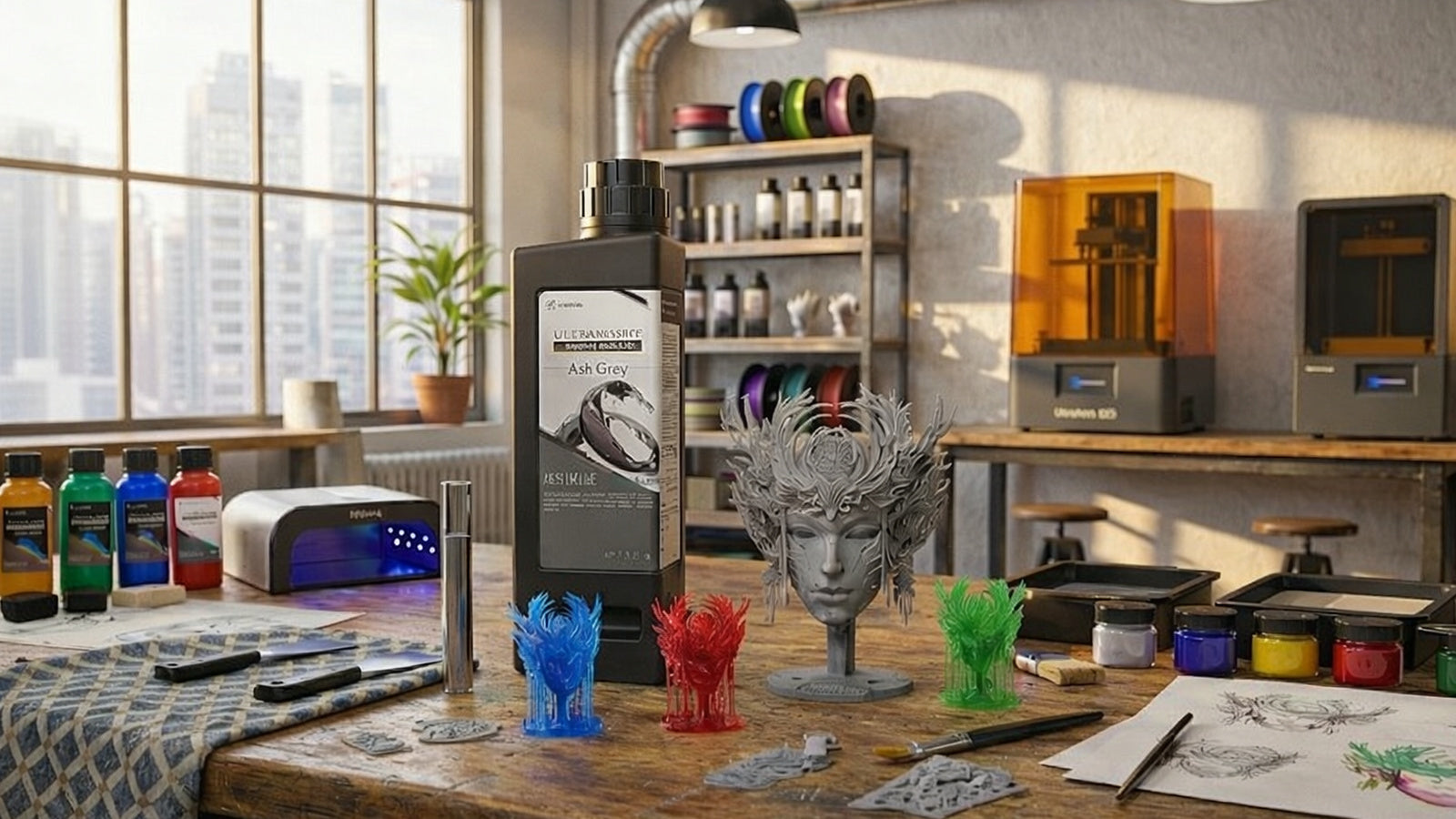
The resin 3D printing products require cleaning, which is often neglected. A print is prone to stickiness, brittleness, or permanent damage without cleaning. Alcohol and water cleaning keep the surfaces with details, mechanical strength, and durability. This guide shows how to clean resin prints using alcohol and water, what to prepare, the step-by-step procedures, and provides professional insights to enhance results. It will help you achieve clean, safe, and consistent results, whether you are using standard resins or water-washable resins.
What Should You Do Before Cleaning?
The most important thing to do before commencing washing is proper preparation that ensures good results and prevents safety loss.
Identify Your Resin Type First
Not all resins can be cleaned the same way. Different resins require different wash solutions.The typical cleaner of standard photopolymers is isopropyl alcohol (IPA), while water-washable materials can be dissolved in plain water. Other resins can be damaged by alcohol contact. You should consider the recommendations of the manufacturer.
Set Up a Safe, Well-Ventilated Workspace
Wash resin in a furnace. During agitation or transfer, there are alcohol fumes, resin vapors, and splashes. Proper ventilation minimizes the risks of inhalation. Your working surface must be well ventilated, firm, and allow you to keep dirty and clean steps apart. Avoid open flames, particularly when using alcohol.
Wear Basic Protective Gear
Little traces of uncured resin are irritating and may cause allergies. Nitrile gloves and safety glasses are essential. If accidental contact occurs, knowing how to get resin off hands safely helps minimize irritation and exposure. For frequent cleaning or poorly ventilated spaces, consider an organic-vapour respirator.
Lay Out Your Cleaning Tools and Containers
Make all the tools ready before beginning the cleaning. Common items include closed washing pots, soft brushes to work gently, towels, and a place with air, where the prints can be left to dry.
Step-by-Step Cost Guide: How to Clean Resin Prints with Alcohol and Water
Alcohol and water are used for cleaning different types of resin prints.
Cleaning Resin with Alcohol
The most popular cleaning technique in resin printing is alcohol cleaning. Isopropyl alcohol of approximately 91% and above eliminates uncured resin on complex geometries and fines.
Step 1: Drain Print to Keep IPA Cleaner
After removing the print from the build plate, let it drip for a short while so that the excess resin can flow back into the vat. This prevents too much uncured resin from entering your isopropyl alcohol (IPA) wash. Although it seems like a small step, it helps your IPA stay clean for longer.
Step 2 Two-Stage IPA Wash
Professional procedures depend on the process of a two-stage wash. The dirty bath, as the initial one, is used to remove most of the surface resin. Slow swirling or gentle agitation causes IPA to reach into hidden places and will not harm delicate features.
The print is then rinsed off in the second container with clean IPA after removing the bulk reservoir of resin. The last rinse gets rid of any leftover residuals and gives the surface a smooth, non-sticky look.
Step 3: Let IPA Evaporate Fully, Then UV Cure
Once washed, leave the print to dry. IPA dries fast, but it gets trapped in crevices and supports. Curing the model while it’s still wet may result in cloudy surfaces or incomplete hardening. The print is then dry underUV-ready conditions. Effective hardening of the resin, enhancing mechanical strength, and trapping surface detail are done when properly cured.
Cleaning Resin with Water
The popularity of water cleaning is also increasing due to the minimization of chemical processing and the ease of cleaning. Nevertheless, attention and adequate disposition are required.
Step 1: Let It Drip and Quick-Rinse
The process is similar to alcohol, allowing the print to drip briefly before washing to remove excess resin. Then, give it a quick rinse with clean water to remove surface residue without forcing uncured resin deeper into fine details. This also maintains your primary rinse container cleaner and effective.
Step 2: Rinse in Short Rounds
Water-washable clean resins would be better cleaned in multiple brief rinses than in a single long soak. Light movement eliminates the resin without hardening the edges or surface imperfections. When swelling or whitening occurs, it can be due to long soaking, particularly in warm water.
Step 3: Dry Completely Before UV Curing
Evaporation of water is slower than that of alcohol, which is why it is necessary to dry it well. The remaining moisture diffuses the UV light when curing and may cause the print to be irregular or chalky. After the print has dried completely, cure it under UV light according to the instructions of the resin manufacturer.
Tips for Cleaning Resin Prints Safely and Cleanly
Minor adjustments of the time spent on washing, the habit of using a dryer, and the choice of materials can significantly increase the quality and consistency of surfaces.
Use Fresh or Filtered IPA
IPA should be filtered or changed up on a regular basis to eliminate resin deposition, which may be deposited back on prints. Clear IPA helps better surfaces. Application of excessively saturated alcohol usually gives cloudy finishes, particularly in fine features and recessed details.
Wash in Short Rounds
Long washes can appear to be thorough, but they are going to damage detail and leave surface scars or whiteness. Shorter cycles minimise risk.
Always Post-Cure after Cleaning
If curing is incomplete or uneven, the printed parts can become weak, brittle, or prone to cracking. Proper UV curing ensures full strength, dimensional stability, and better resistance to heat, moisture, and aging.
Let Prints Dry Before Handling
Working with wet prints will result in the possibility of fingerprints or contamination. To enable the prints to dry properly and permanently, to provide a smooth surface, and to make handling safe. This is of particular concern before UV curing because any liquid that gets trapped may ruin a smooth distribution of the light.
Match the Cleaner to the Resin Type
As we have mentioned before, not all resins can be cleaned with the same solution. Always check the resin manufacturer’s guidelines before choosing your cleaning method to avoid surface damage or incomplete cleaning.
If you prefer to go alcohol-free, water-washable products ease the cleaning process. Selecting a resin that fits your working protocol saves on trial and error and errors in the post-processing part.
As an example, HeyGears UltraPrint-Modeling Water Washable resin PAWW10 needs approximately 3 minutes on water rinse, allowing it to be used to model in detail with little post-processing. Likewise, UltraPrint -Modeling PAWW20 Water Washable Modeling Resin has an even faster cleanup time, with an approximate rinse time of 2 minutes and a fast drying cure time.

FAQ
How Long to Wash Resin Prints?
The optimal time to wash depends on the type of resin and cleaning technique. Typical bathing times per stage in alcohol include one to three minutes. In total, the time taken by water-washable resins ranges between two and five minutes. Overwashing may make surfaces soft and can result in whitening. Wash time should be kept short and controlled.
Can I Wash Resin Prints in the Sink?
It is not recommended to wash prints in the sink. Raw resin is capable of blocking pipes and damaging the environment. Separate containers should be used, and waste must be discarded as per the local rules after giving a final cure to any leftover resin.
Do You Cut Resin Print Support Before or After Curing?
Most people remove supports immediately after washing, before the print is fully cured. At this stage, the resin is solid enough to hold its shape but still soft, which helps minimize damage to delicate surfaces during support removal. Once fully cured, the print becomes hard and brittle, making support removal more difficult and increasing the risk of breaking or chipping the model.
Why Does My Print Turn White or Chalky After Washing?
Incomplete drying, excess amount of alcohol or water left on the surface, is likely to result in a white or chalky appearance. This problem is generally avoided by means of proper drying and moderate washing.
It can also vary by formulation and additives, so knowing what resin is made of helps you set the right wash time, agitation, and drying to prevent a chalky finish.
What’s the Safest Way to Dispose of Used IPA or Resin Wash Water?
When cured, remove the solids by filtering and then discard the liquid in accordance with the local waste disposal requirements. Do not pour down the drain untested liquid that contains resin.
Conclusion
This article clearly shows how to clean resin prints with alcohol or water. Cleaning is a way of preserving details, strength, and safety. You can depend on the clean resin prints to perform at the professional level by correctly preparing the resin, choosing the correct cleaner, and regulating the washing and curing.
Share:
3D Printed Toys: 15 Best Creative Ideas and Step Guide
Best Home 3D Printer 2026: 5 Picks That Just Work