

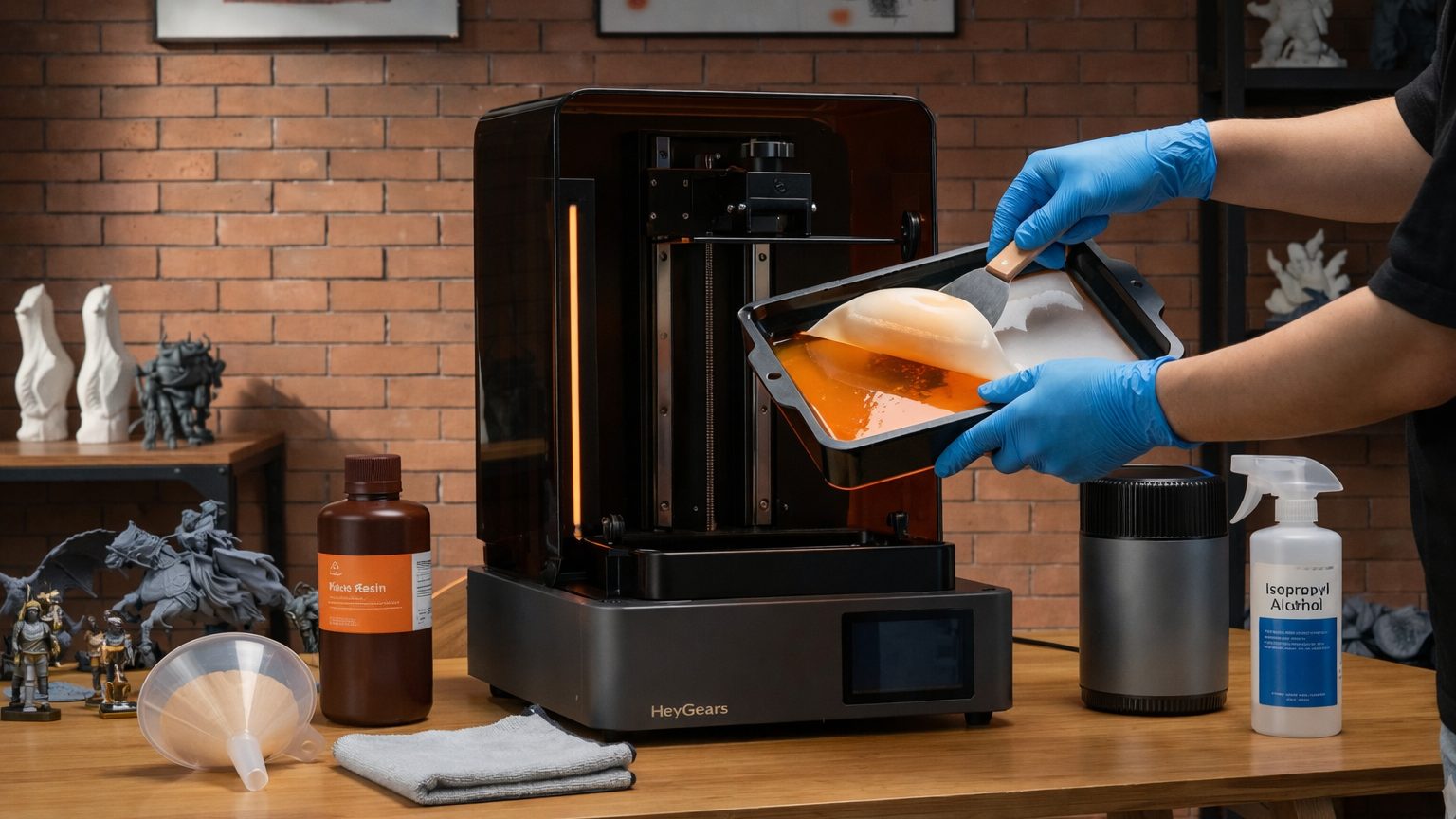
A resin 3D printer vat holds the liquid resin that forms each printed layer. During normal use, small cured bits, support pieces, and thin resin layers slowly build up on the FEP film. If they are not cleaned in time, they can block UV light, scratch the surface, and cause repeated print failures.
To help you get better results, this guide explains the following subjects:
-
How to clean a resin 3D printer vat
-
Basic tools you need and safe practices
-
How to remove residue without damaging the FEP, extend the vat’s life, and keep print quality stable in daily use
When Should You Clean Your Resin Vat?
Cleaning the resin vat on time helps protect the screen, avoid print failures, and keep the resin clean. It also ensures stable curing and good layer bonding during long-term use.
After a Failed Print
A failed print often leaves cured resin stuck to the FEP film. If this is not removed, the next print can damage the screen or cause repeated failures.
-
Check the vat for hardened resin sheets or loose cured fragments
-
Remove stuck resin using the vat clean function or soft scraper
-
Inspect the FEP for dents, clouding, or deep scratches
-
Refill only after the surface is fully clean
Switching Resin Colors or Types
Different resins and pigments can react or mix if the vat is not cleaned. This affects curing behavior and surface quality.
-
Drain the remaining resin completely
-
Wipe the vat with a lint-free cloth and IPA
-
Clean corners and screw areas where resin collects
-
Dry the vat before pouring new resin
Before Long-Term Storage
Leaving resin in the vat for weeks can cause separation, thickening, and film damage.
-
Empty the vat and filter reusable resin
-
Clean the FEP and metal frame carefully
-
Make sure no resin residue remains
-
Store the vat in a dust-free, dark place
What You Need Before Starting the Cleanup
Before opening the vat of your resin 3D printer, make sure all your tools are ready. This helps you clean faster, reduces spills, and protects the FEP film.
Safety Equipment for Resin Handling
Uncured resin is hazardous. You must handle it with care and keep the following in mind:
-
Always wear nitrile gloves to prevent skin contact. If spills happen, make sure you know how to get resin off your hands safely.
-
When pouring resin, wear safety glasses. So the splashes do not get in your eyes.
-
Wear a face mask if working near open resin for long periods.
-
Wear a work apron or old clothes for spill protection.
Essential Spatulas and Cleaning Solvents
These tools allow you to remove residue without stressing the FEP.
-
Plastic or silicone spatula: Lifts cured resin without scratching.
-
Soft rubber scraper: Cleans thin film residue.
-
Funnel and paint filter: Recovers clean resin while catching debris.
-
Microfiber cloth: Dries the vat without leaving lint.
-
Isopropyl alcohol (90%+): Dissolves uncured resin for the final wipe-down.
Pour unused resin back through a filter before cleaning. This prevents debris from returning to the vat.
Abrasive Supplies That Damage FEP Film
These items cause micro-scratches that reduce print quality and lead to leaks.
-
Paper towels with a rough texture
-
Scrubbing pads or steel wool
-
Hard brushes
-
Utility blades or metal scrapers
-
Dry wiping on hardened resin
If cured resin is stuck, soften it with alcohol first. Never scrape it dry.
Resin Vat Cleaning: Manual Cleaning and Tank Cleaning
Resin vats can be cleaned either by hand or by using the printer’s built-in tank cleaning function. Manual cleaning is best for routine maintenance and resin changes. Tank cleaning is useful after failed prints or when cured debris is suspected in the vat.
Manual Cleaning
Manual cleaning provides full control and helps prevent long-term damage to the FEP film.
Step 1: Emptying the Vat
-
Remove the vat from the printer carefully and keep it level.
-
Pour unused resin back into the bottle through a paint filter.
-
Before cleaning, check the vat bottom to look for any hard resin residue.
-
Also, do not leave resin in an open vat over an extended period.
Step 2: Cleaning with Solvent
-
Pour a small amount of isopropyl alcohol into the vat.
-
Gently spread it across the FEP using a soft spatula or cloth.
-
Let the alcohol dissolve the thin resin residue.
-
Wipe lightly with a microfiber cloth.
Do not press down on the FEP. Excess pressure causes stretching and early failure.
Step 3: Dry the Vat Completely
-
Allow the vat to dry in a dust-free place.
-
Inspect for streaks, fingerprints, or resin trapped.
-
Before reinstalling, be sure that there is no alcohol left.
Any leftover solvent can affect resin curing in the next print.
Tank Cleaning Function
Tank cleaning uses UV exposure to cure loose resin into one thin sheet. It is useful after failed prints or when small cured flakes may be floating in the vat.
Note: Residue warnings only appear during the pre-print check. Running tank cleaning alone will not trigger detection.
Step 1: Run the Tank Cleaning Function
-
If resin is already in the vat, reinstall the vat and fill it with enough resin to cover the bottom.
-
Open the printer menu and select Tank Cleaning.
-
Start the process and let it complete without interruption.
The printer will expose the entire vat bottom to form a solid resin layer.
Step 2: Remove the Cured Sheet
-
After curing, gently lift one corner using a plastic spatula.
-
Peel the cured sheet slowly from the FEP.
-
Check that no fragments remain attached.
If the sheet breaks, repeat the tank cleaning process.
Step 3: Post-Cleaning Rinse and Reset
-
Use isopropyl alcohol for rinsing the vat.
-
Wipe it with a microfiber cloth.
-
Check the FEP for scratches, clouding, and dents.
-
Reinstall and refill it using filtered resin.
This final check ensures the vat is ready for stable printing.

How to Dispose of Resin Waste and Dirty IPA
Resin waste and used IPA should be treated like chemical waste. Never pour liquid resin down the drain. It can damage pipes, harm the environment, and create safety risks in your workspace.
Curing the Waste
Anything with liquid resin on it must be fully cured before disposal. Store the failed prints, support items, gloves, wiping cloths, and paper towels in a transparent plastic bag or box. Leave the bag open initially. Put it under the direct sunlight or UV curing lamp until the resin is completely cured.
Leave it until:
-
The surface is hard
-
No sticky areas remain
-
No resin smell is present
In sunlight, this usually takes half a day. Under a UV lamp, it may take one to two hours, depending on thickness.
Once cured, break thick parts if needed and check inside. If the center is still soft, cure again. Only fully solid waste should go into the normal trash. Never throw away liquid resin, even if it is only a few drops.
Handling Dirty IPA
Dirty IPA contains dissolved resin and cannot be poured out. Store used IPA in a transparent container with a lid. Label it clearly as “Resin IPA”. Keep it away from heat and flames.
When it becomes cloudy: Store the container in a dark place for a couple of days. During this time, leave the container undisturbed; the resin will slowly settle at the bottom.
After this, pour the clear IPA off the top into another container for reuse. The sludge at the bottom can then be exposed to UV light to cure for disposal. Do not dispose of it in sinks, drains, toilets, or exterior ground. Even small quantities cause damage in the long run.
FAQ
Do I Need to Remove the FEP Film to Clean the Vat?
Do not remove the FEP film unless it is damaged. However, you should remove the entire vat from the printer to prevent spills on the LCD screen.
Can I Use Paper Towels to Clean the Vat?
Paper towels are not recommended. They can leave small fibers and cause fine scratches on the FEP. These scratches reduce print quality and increase failure risk. Use a lint-free cloth or microfiber wipe instead.
Why Is My FEP Film Cloudy After Cleaning?
Cloudy FEP usually means resin residue has dried on the surface, or the film has been rubbed too hard. Old or dirty IPA can also leave a film. If cleaning with fresh IPA does not restore clarity, the FEP should be replaced. Refer to our guide on when and why to replace FEP film for detailed instructions.
Does Tank Cleaning Trigger the Residue Detection Warning?
Residue detection warnings typically appear only during the pre-print check, so running the Tank Cleaning function alone will not trigger this prompt. Standard printers rely on you to visually check for debris.
However, advanced systems use hardware sensors to automate this safety check. The Reflex 2 3D Printer uses force sensors with 0.01 N sensitivity to detect resin residue as small as 0.15 mm, automatically stopping the machine upon detection or print failure.
Similarly, the Reflex 2 Pro 3D Printer features the same high-sensitivity residue detection with auto-stop capabilities, offering industrial-grade protection for the screen and vat.

Conclusion
Regular resin 3D printer vat cleaning is essential for stable printing and long FEP film life. Removing cured resin, failed print debris, and residue helps prevent screen damage and exposure problems.
Clean the resin vat after failed prints, resin changes, and long storage. Use soft tools, filtered IPA, and light pressure to avoid scratching the FEP. Always check the vat before the next print. Make sure no cured resin, scratches, or cloudy areas are present on the FEP.
When the vat is kept clean, the printer runs more smoothly and production stays consistent.
Share:
5 Best 3D UV Resin Printers in 2026
Does 3D Printing Cause a Smell? Causes and How to Reduce Odor